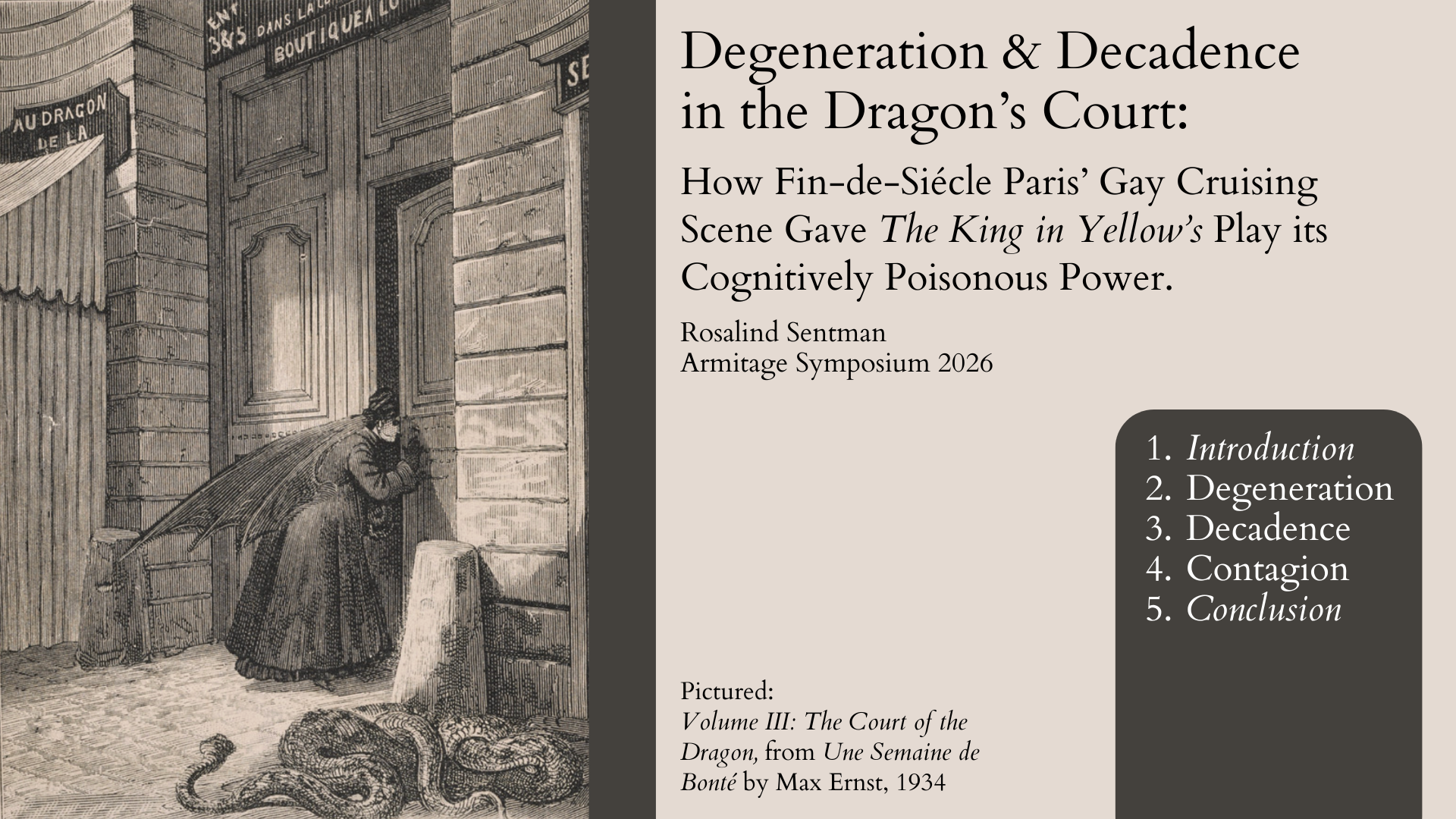
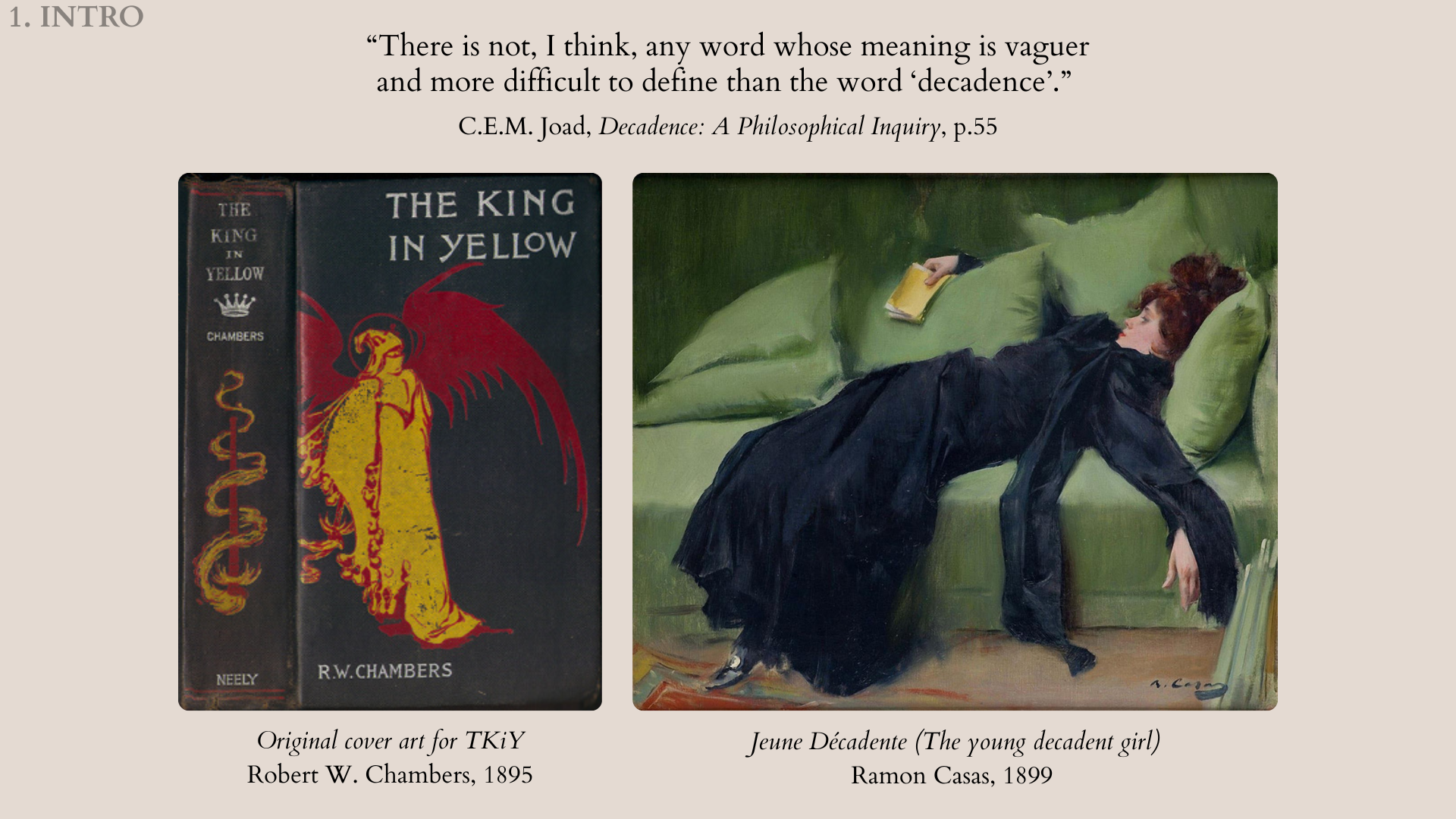
In 1895, when Robert W. Chambers published a collection of short stories under the title The King in Yellow, contemporary readers would have recognized the color as a reference to ‘decadence’. This was an aesthetic movement that came out of mid-century Paris, dealing with themes of societal and moral decay, which later in the century would become almost a cultural or countercultural movement, and the subject of a moral panic which cast its art and attitude as a danger to the structure of society.
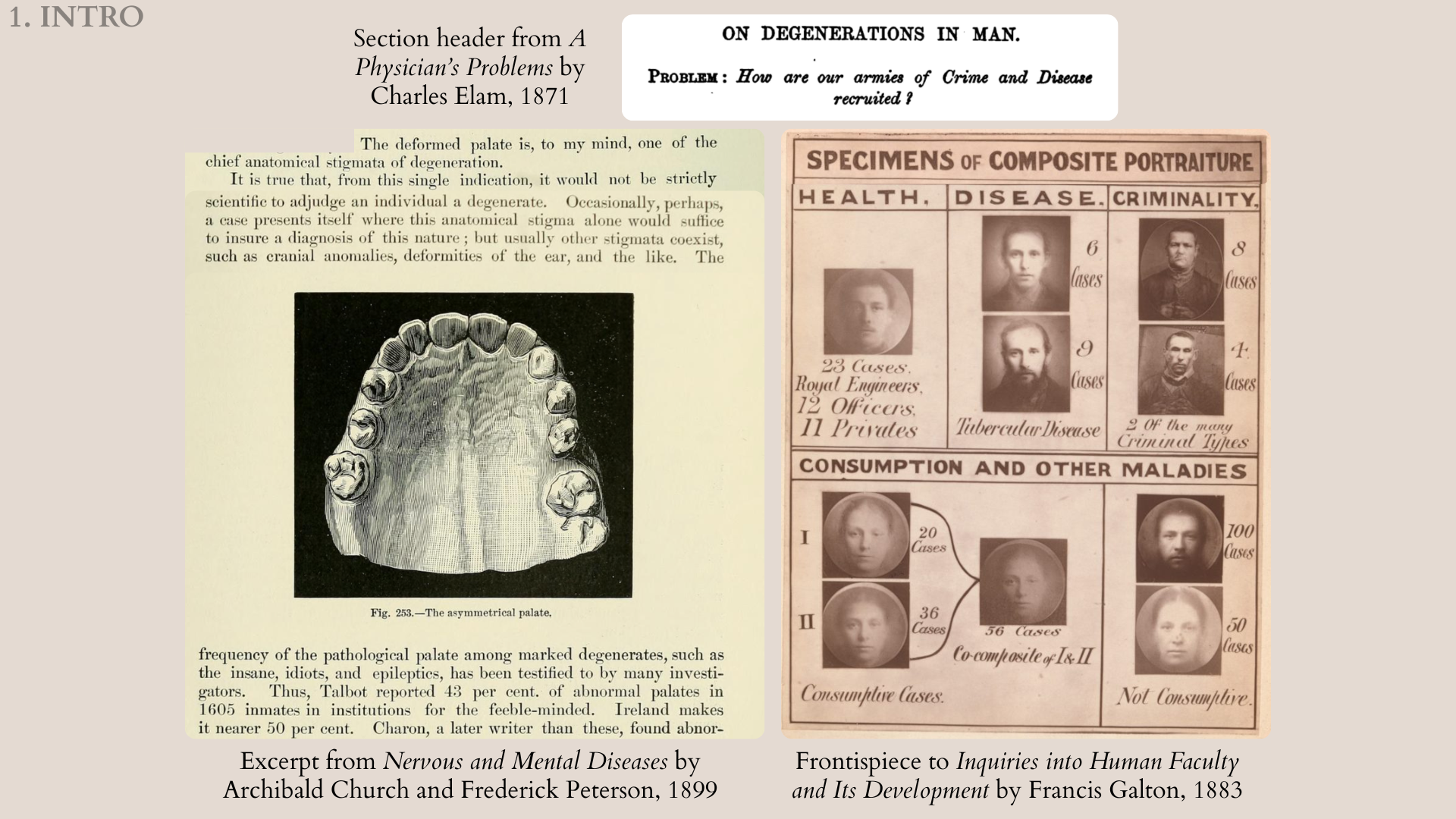
This moral panic comes in the form of a widely accepted pseudoscience called ‘progressive hereditary degeneration’. This is a contagious genetic condition which causes insanity and criminal behavior. The physicians who endorsed this theory defined those making decadent art as sufferers of this condition, and stated that their art could act as a vector for infection.
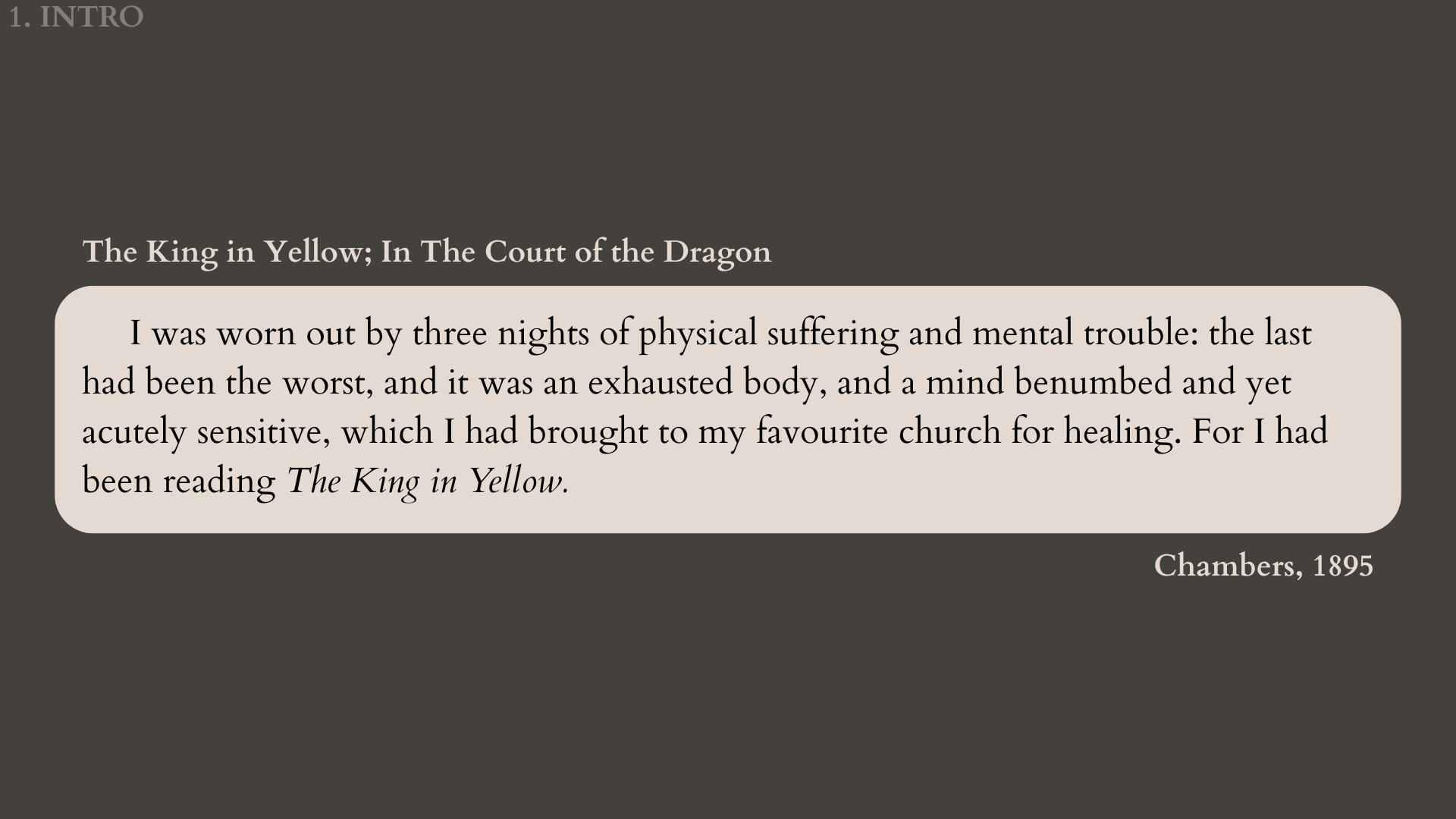
In The King in Yellow’s third short story, In The Court of the Dragon, our unnamed narrator is unsettled, as he has been reading a play, also called ‘The King in Yellow’: a fictional play within the universe of the book which is said to cause madness in anyone who reads it.
He attends evening Mass to calm his soul, but is startled and terrified by the organist, someone he dimly recognizes but cannot place, who radiates a malevolent energy that suggests he wishes the narrator harm.
This organist pursues the narrator in seemingly impossible ways through the streets of Paris and into a large public park on the west end of the city, where he loses himself until night falls, and he hails a cab to take him back to his apartment in the titular Court of the Dragon. While describing his home, he remarks, “When I first came here to live I was young, and not alone.”
This is not elaborated on.
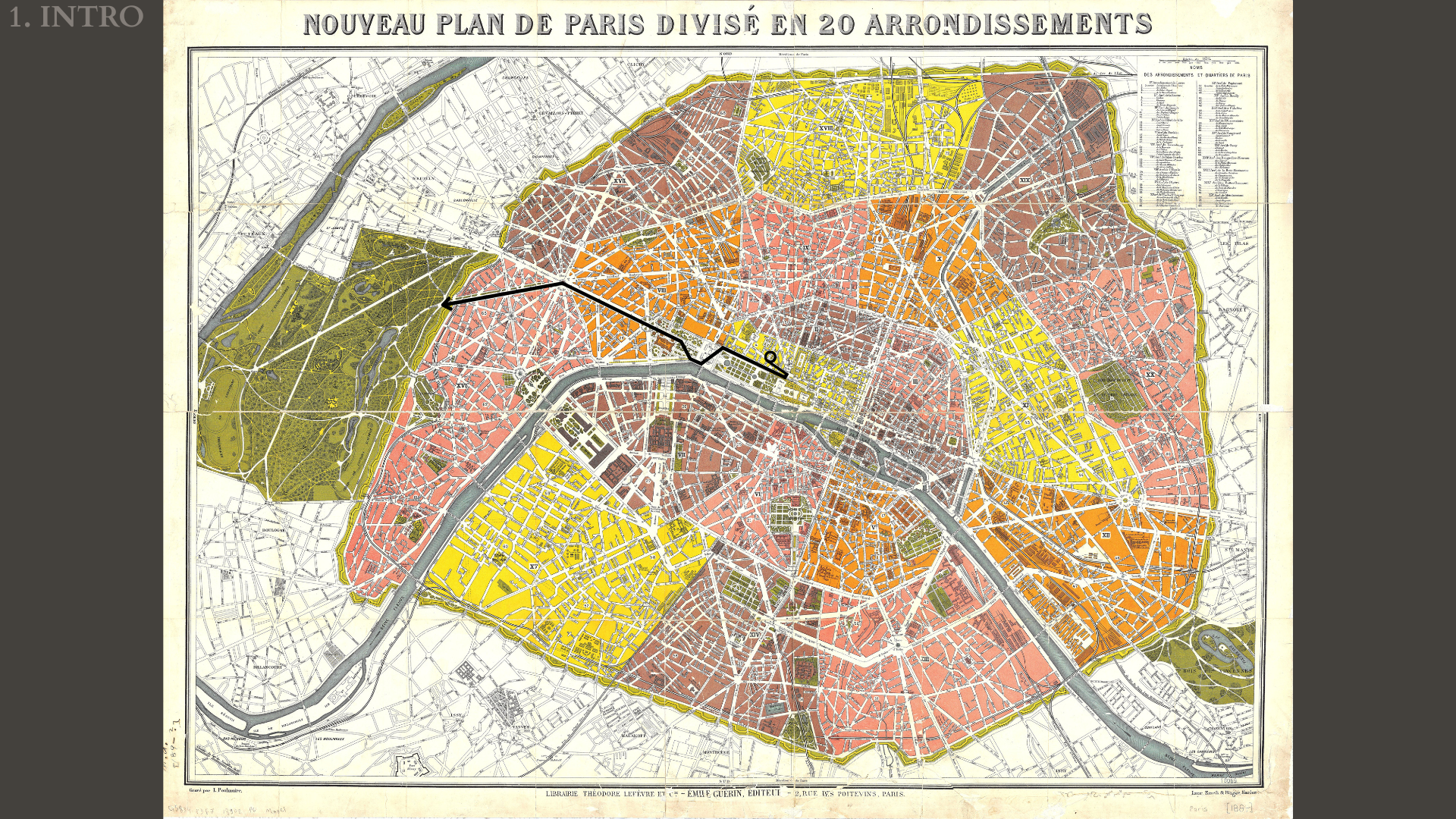
Chambers lived in Paris for seven years in the 1880s—as a young man he studied visual art at the Ecole des Beaux Arts and the Académie Julian—which might explain why the route that the narrator of this story takes through Paris is detailed so exactly that you can actually trace it on a map.
As you can see here, I’ve traced it on a map! This is a beautiful map of 1890s Paris, from the 1890s.
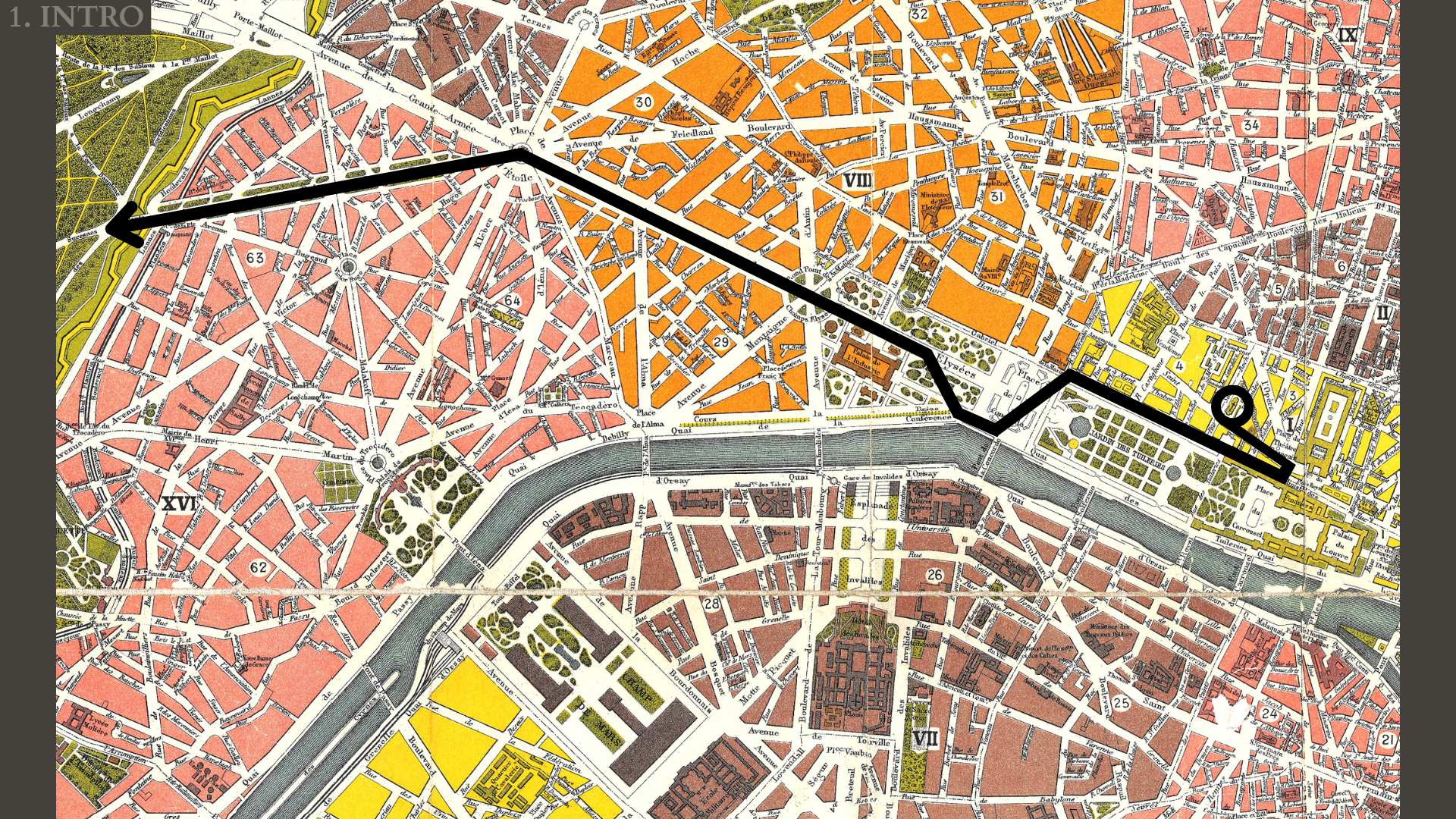
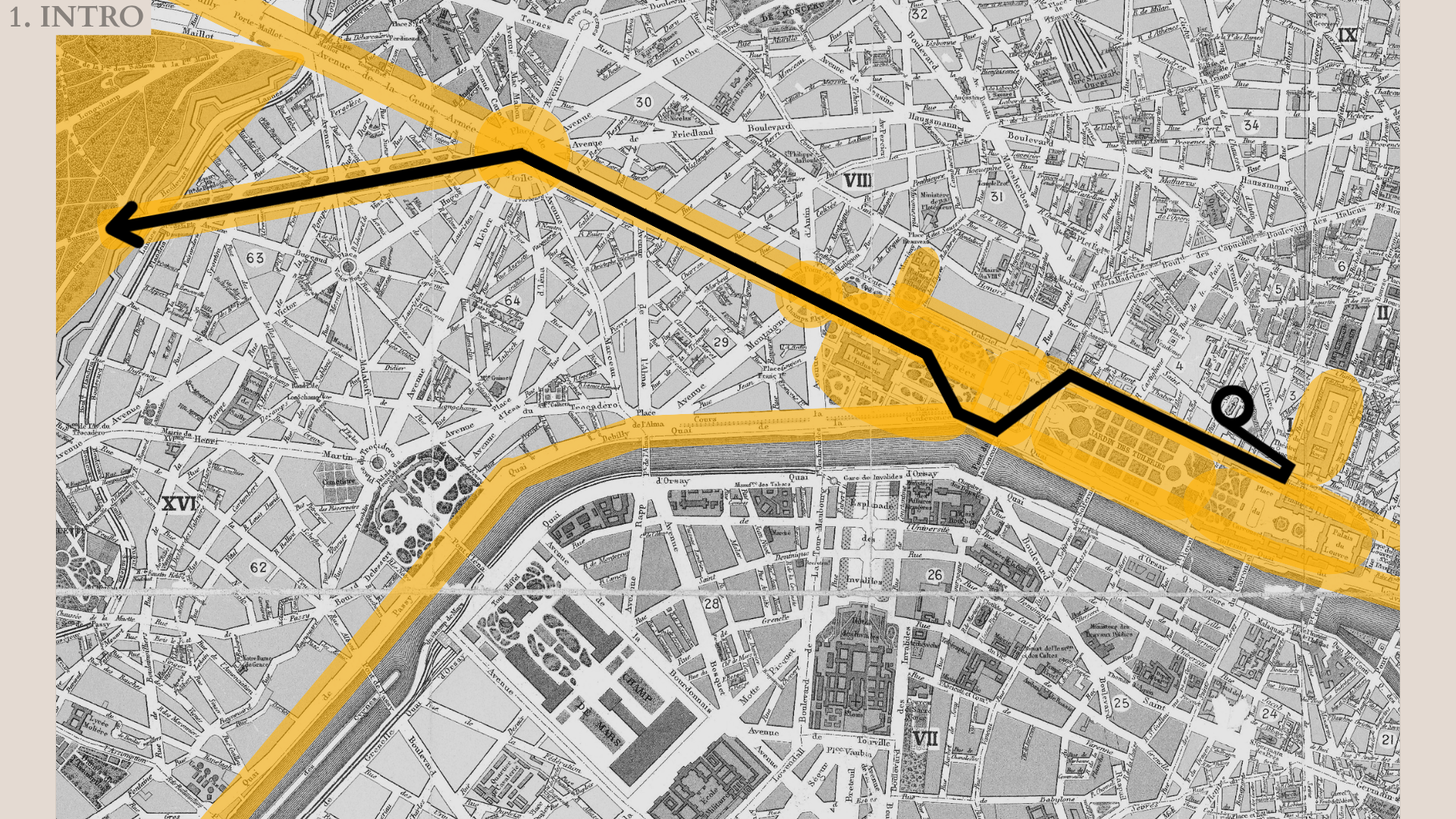
Here is the route the narrator takes through the 14th arrondissement.
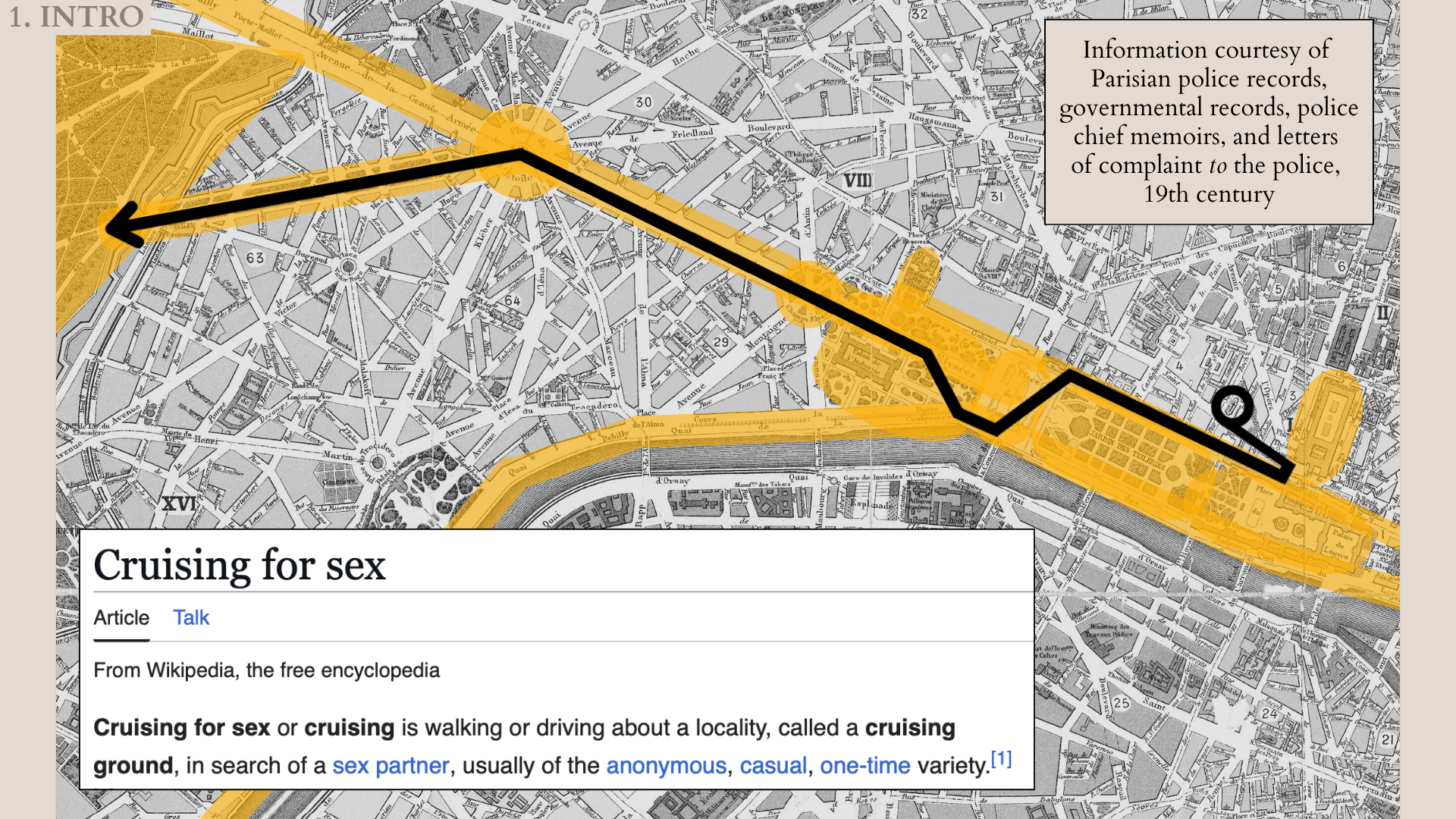
And here…
…are all the extremely well-known gay cruising areas that that route touches!
(Circa 1850-1900, although most are still in use today.)
I would like to propose that this was intentional.